
Table of Contents
Been told there is not enough bone for an implant in your upper back jaw? You have more than one option. For upper back teeth, a sinus lift or a shorter implant can both make an implant possible. A sinus lift is a procedure that adds bone between the upper jaw and the sinus above it. Understanding both paths helps you and a dentist choose the right one. Both options are common and well understood, so there is rarely a need to give up on an implant, and a thin upper jaw is a common and solvable problem. Knowing how they differ makes the decision clearer.
Key Takeaways
- Upper back teeth often have less bone because the sinus sits directly above them.
- A sinus lift adds bone height beneath the sinus so a standard implant can be placed.
- A shorter implant can sometimes anchor in the bone already there, skipping the graft.
- The choice depends on how much bone remains, plus your health and your timeline.
- A 3D scan measures the site and usually points clearly to one option or the other.
Why Are Upper Back Teeth Tricky?
The upper back jaw is a hard place for implants. According to the American Association of Oral and Maxillofacial Surgeons, losing upper back teeth leads to natural bone loss, and the maxillary sinus can expand downward, leaving too little bone for an implant. The sinus is an air-filled space right above these teeth.
When bone is short there, a standard implant may not have enough to hold onto. That is the problem both options aim to solve. The bone here can also be softer than in other areas, and that combination of thin, soft bone is why planning matters so much. That is why so many upper back implants need a little planning first, and a scan shows exactly what you are working with.
Option 1: A Sinus Lift
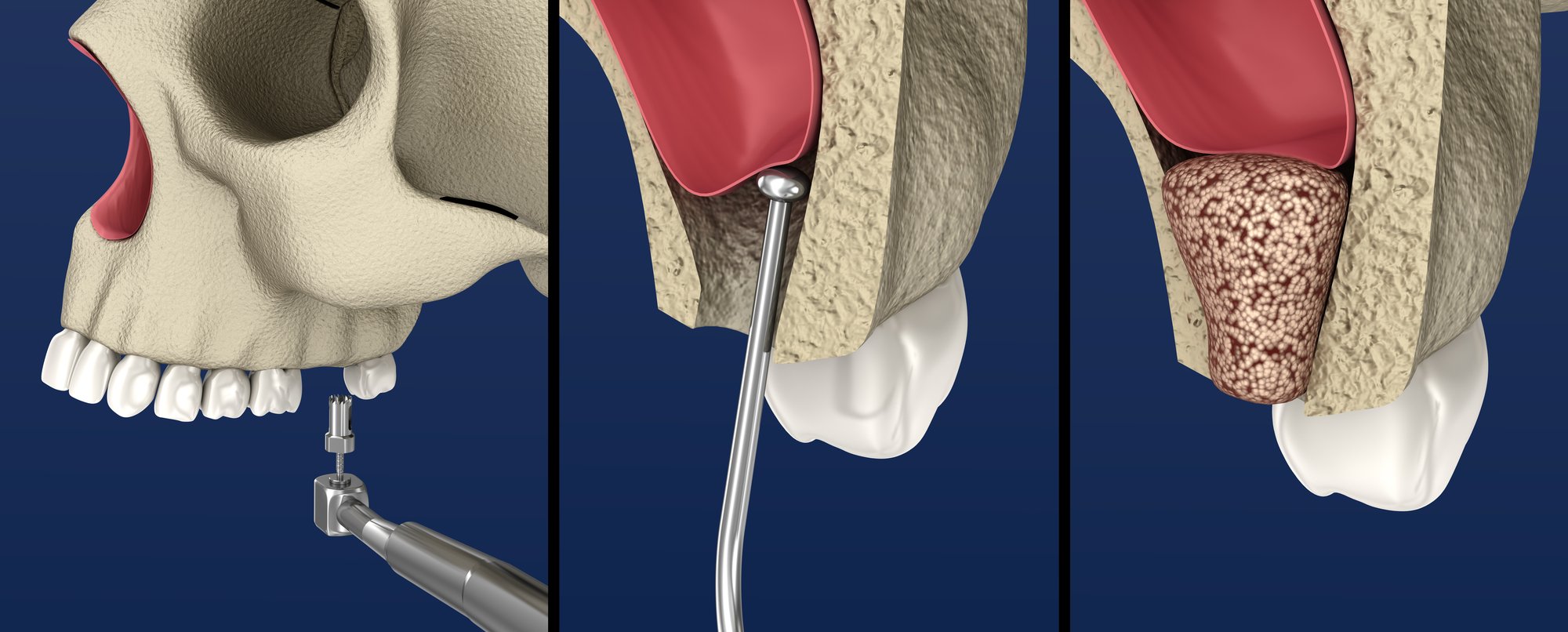
A sinus lift rebuilds the missing bone. In a sinus lift procedure, the surgeon gently raises the sinus membrane and adds bone graft material below it. Over a few months, the graft fuses with your jaw to create enough height for a standard implant. This is a well-proven approach with a strong track record. The trade-off is added healing time before the implant goes in. For many people, the extra wait is worth a strong, standard-sized implant, and the added bone can also support future implants nearby. The procedure is done in the office with numbing; it has helped many people qualify for implants, and it is a reliable way to rebuild what was lost.
Option 2: A Shorter Implant
Sometimes you can skip the extra bone. Short dental implants are designed to anchor in a smaller amount of bone, which can avoid the need for a sinus lift. When there is just enough healthy bone, a shorter implant can be placed in a single, more direct step. This often means less healing time and lower cost. It is not right for every case, but it is a valuable option. Advances in implant design have made shorter implants more dependable than in the past, so they can be a good fit for people who want to avoid extra surgery. Fewer steps often mean a faster path to your new tooth, and a scan confirms whether enough solid bone is there.
How Do You Choose Between Them?
A scan makes the decision clear. A 3D image shows exactly how much bone you have, which is the key factor. If bone is very limited, a sinus lift may be the safer route to a lasting implant. If there is enough for a shorter implant, that can be quicker and more direct. Your health, timeline, and goals all factor in. Some people prefer the more direct path of a shorter implant when it is possible, while others choose a sinus lift for the most stable long-term base. A dentist walks you through the trade-offs of each, since there is no single right answer for everyone.
What Is Recovery Like for Each?
Recovery differs between the two paths. A sinus lift adds a few months of healing before the implant is placed, though the surgery itself is routine. A shorter implant skips that step, so treatment can move faster. Both are done with numbing and usually cause only mild, short-lived soreness. A dentist will explain the timeline for whichever option fits you. Either way, soft foods and gentle care help the first few days, and most people return to normal activities quickly. Mild swelling is normal and fades within days, and following the aftercare steps protects the result.
The Right Fit for Your Upper Jaw
For upper back teeth, a sinus lift and a shorter implant are both good ways to make an implant work. A sinus lift builds up bone for a standard implant, while a shorter implant can use the bone you already have. With the right plan, even a thin upper jaw can support a lasting implant. The right option is the one that fits your bone, your health, and your goals, and either path can restore your bite and keep the upper arch working the way it should.
If you want to learn more about sinus lift and shorter implant options for upper back teeth, visit our Sinus Lift in Carmichael, CA, page or schedule a consultation.